
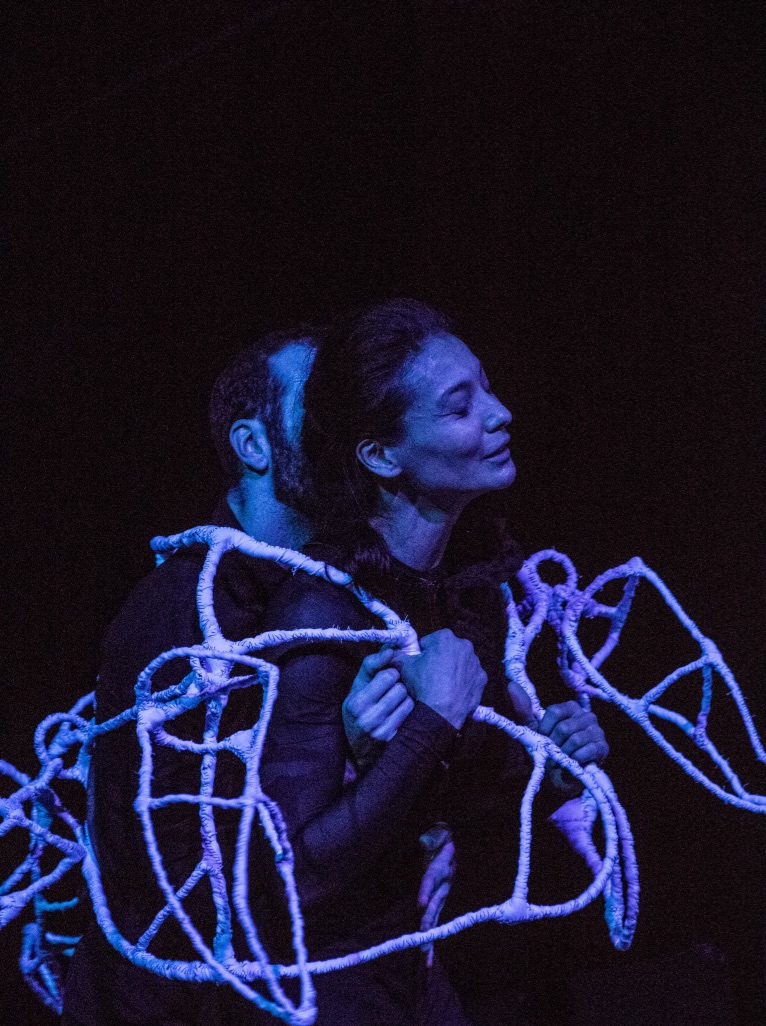
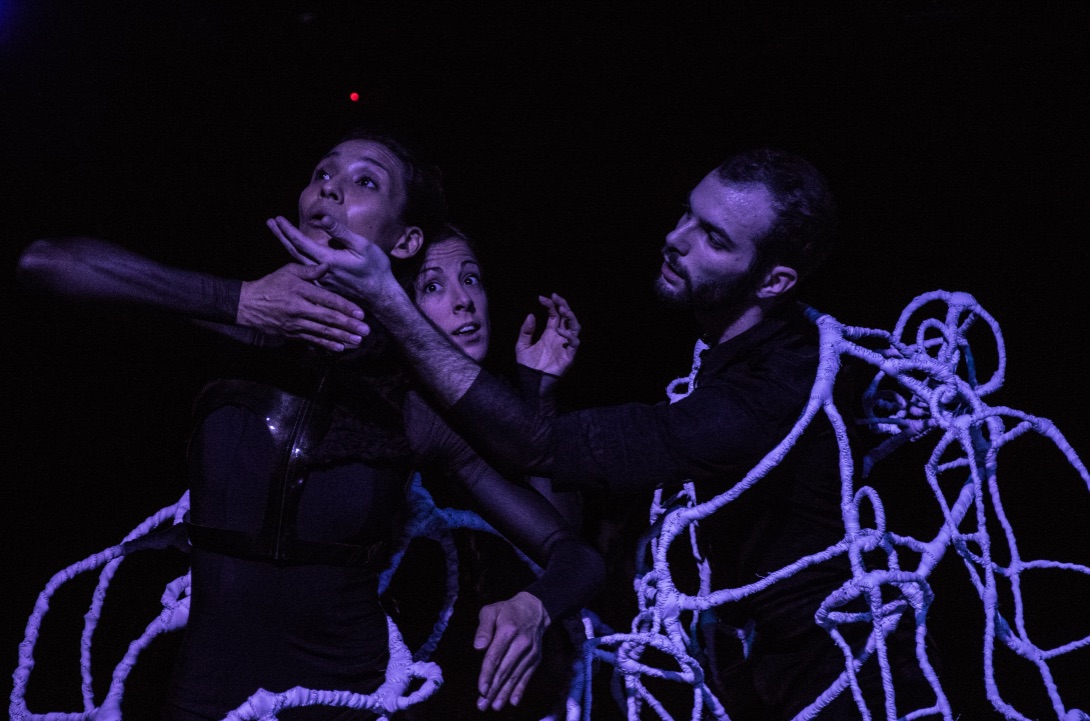
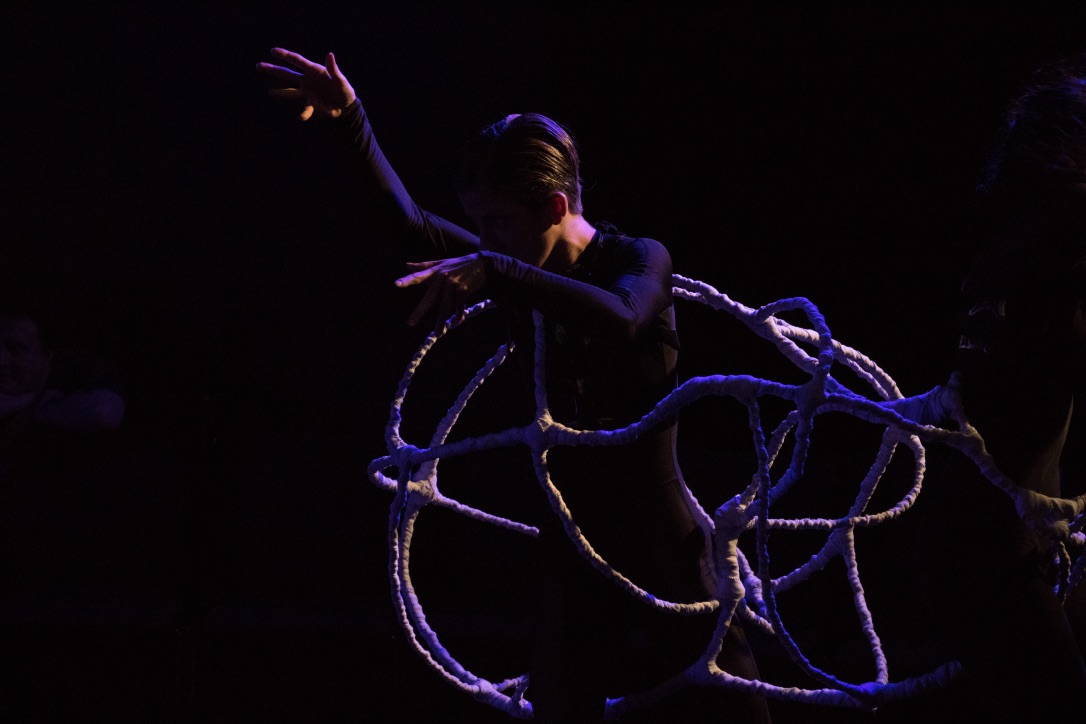
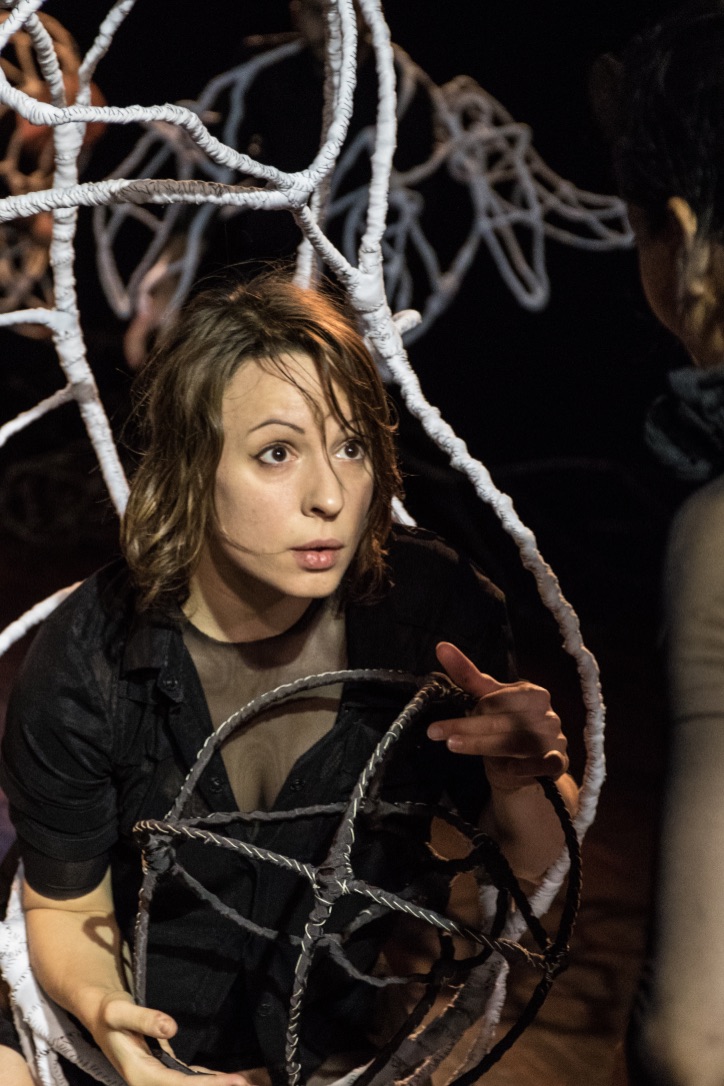


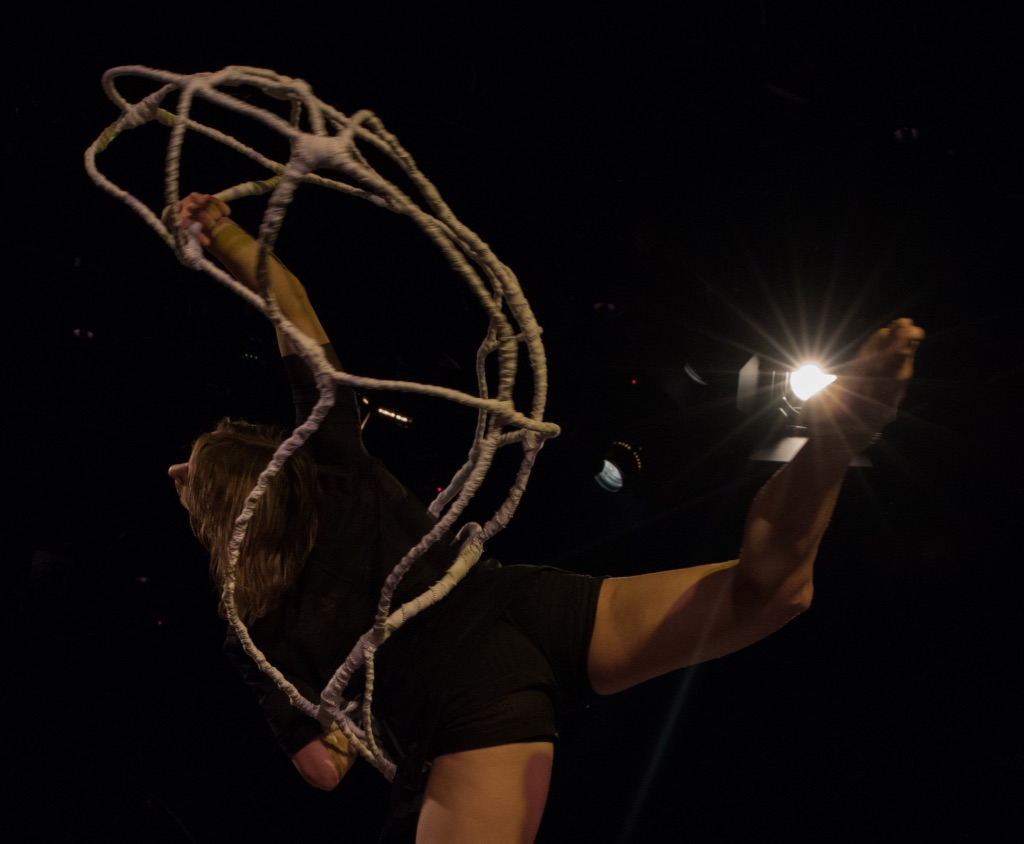
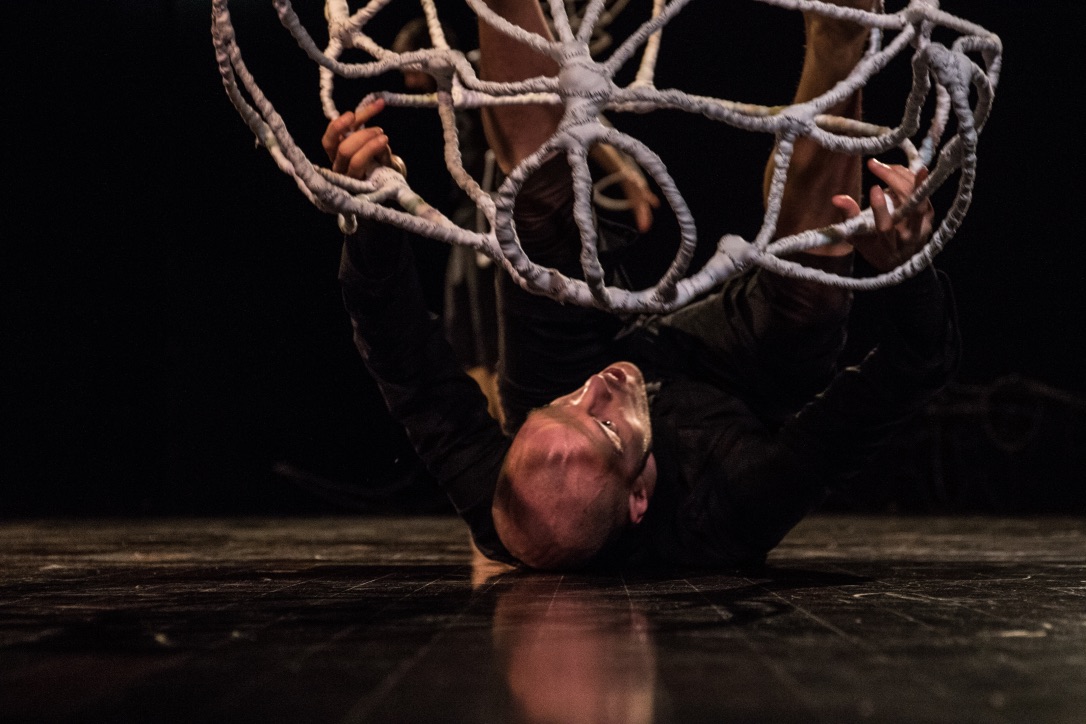
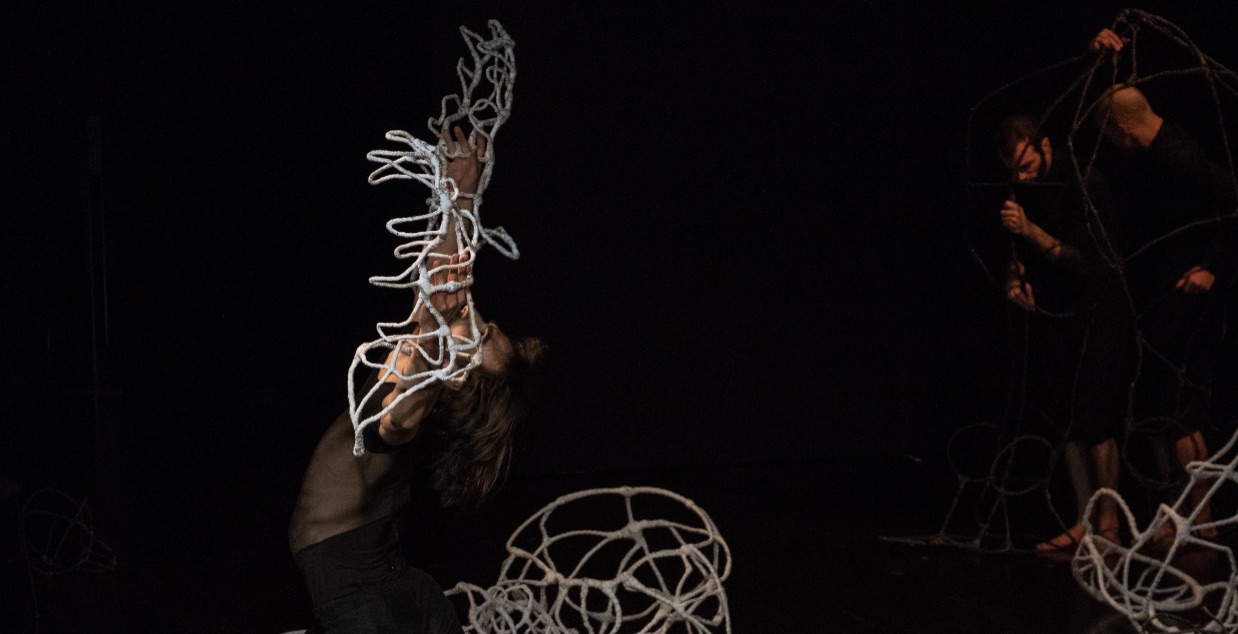
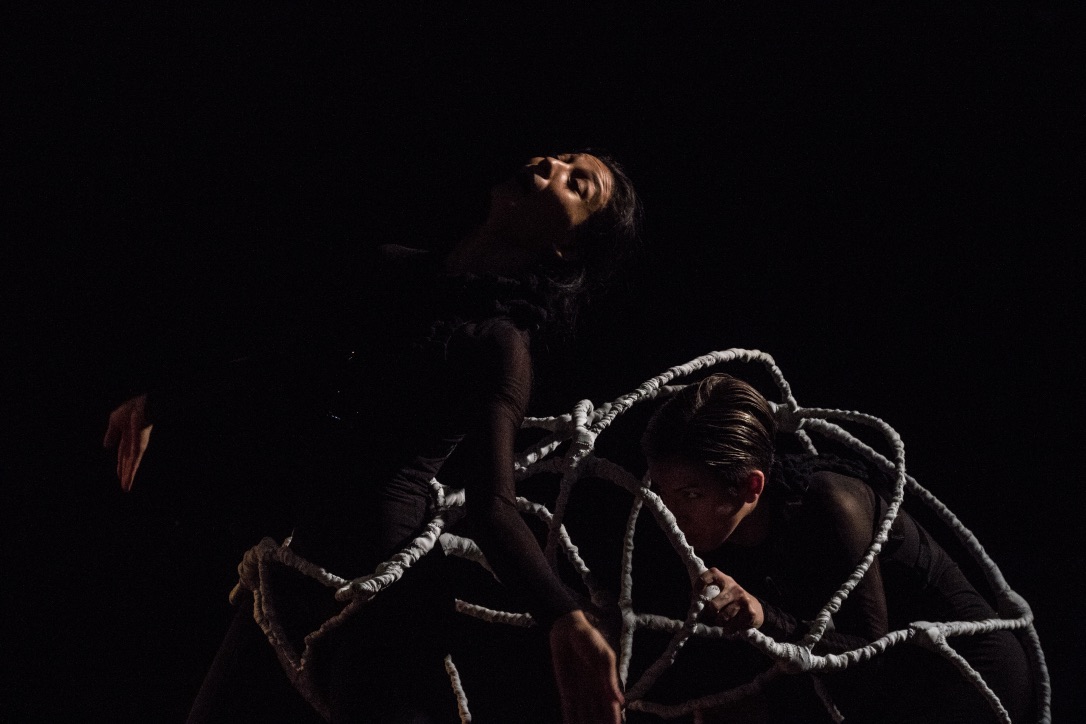




Dance piece by Aleksander Kaplun and Andressa Miyazato.
The spider god Anansi is one of the most iconic trickster figures in West African mythology—an entity who exists between human, animal, and divine realms. In the stories passed down through generations, Anansi sets out to create a world of his own, encountering both the absurdities and possibilities that emerge when one tries to shape reality. These tales, especially those featuring his wife Shi Maria, reveal not only the challenges of creation but also the cunning, humor, and resilience embedded in these mythic figures.
For choreographer Andressa Miyazato, a Brazilian artist, the stories of Anansi resonate with Brazil’s colonial history and the enduring presence of African diasporic culture. In a country where memory and resistance were often kept alive through embodied practices—such as Capoeira, where combat and dance merge—Miyazato’s interest in African cosmologies becomes both an artistic and political gesture.
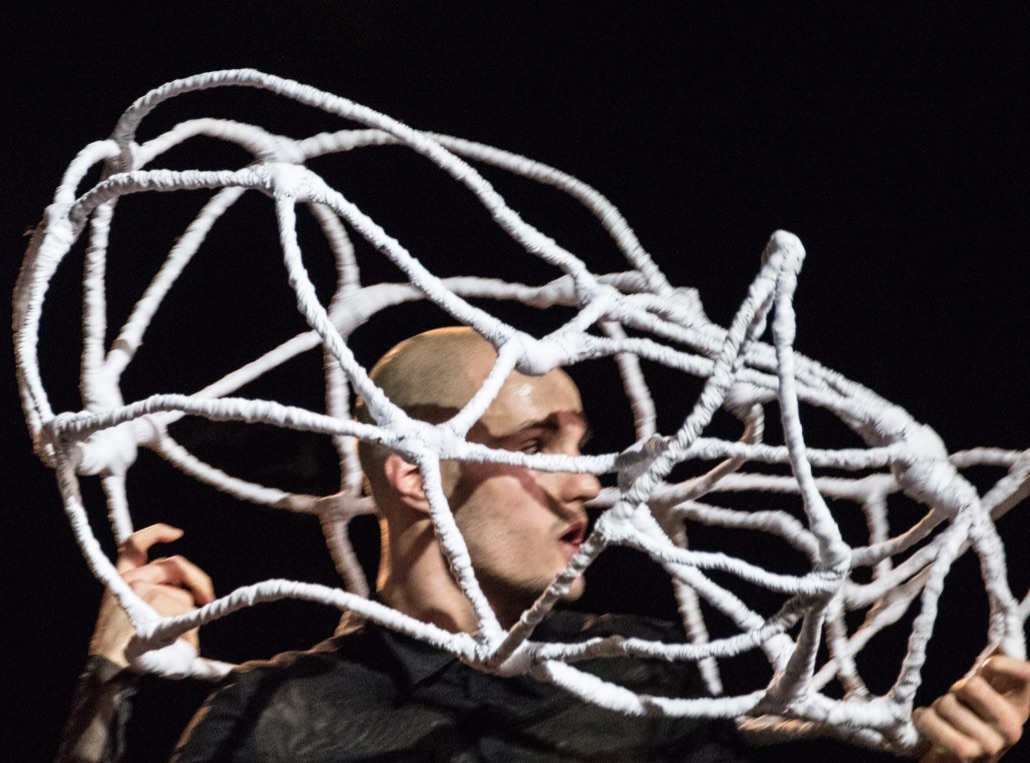
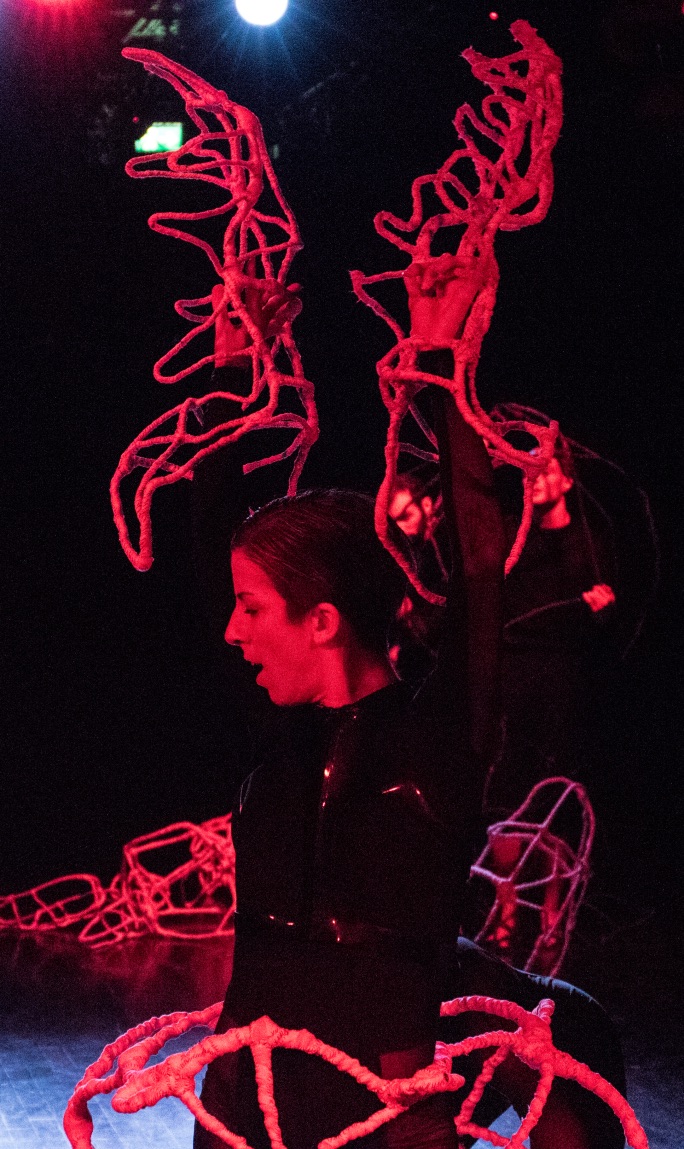
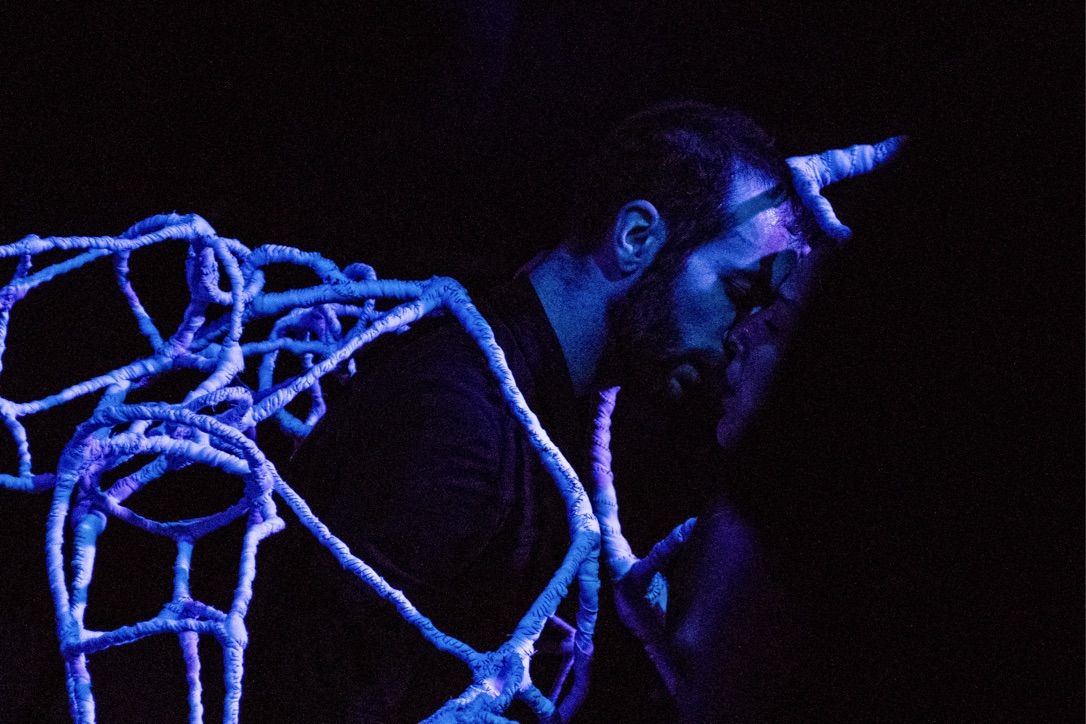
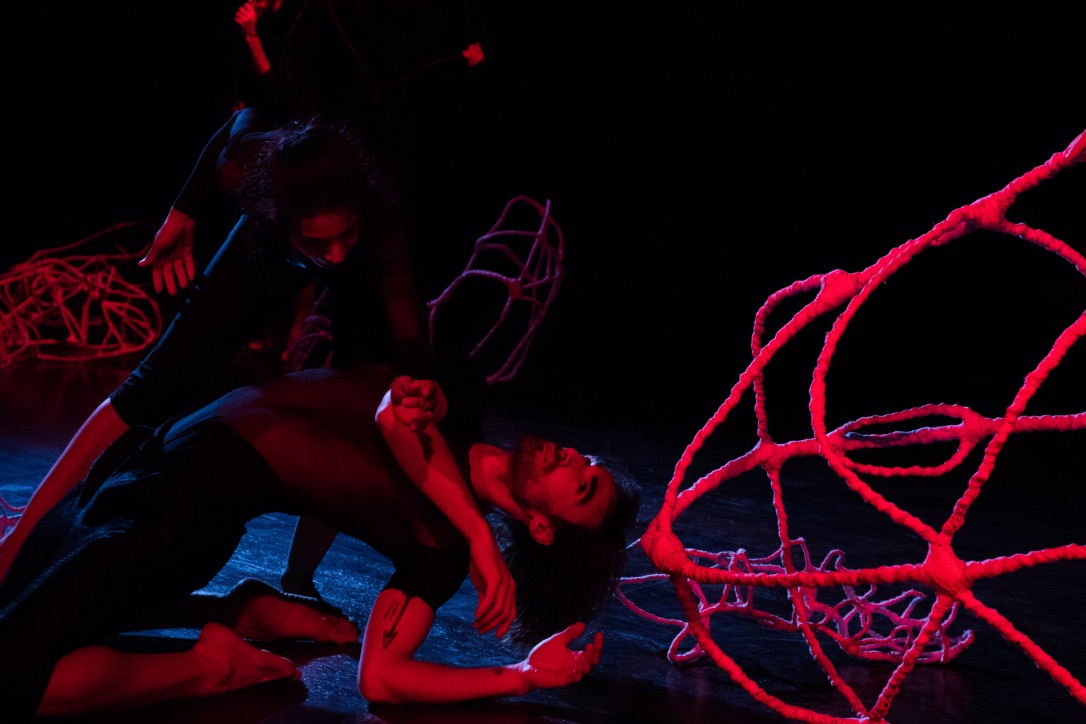
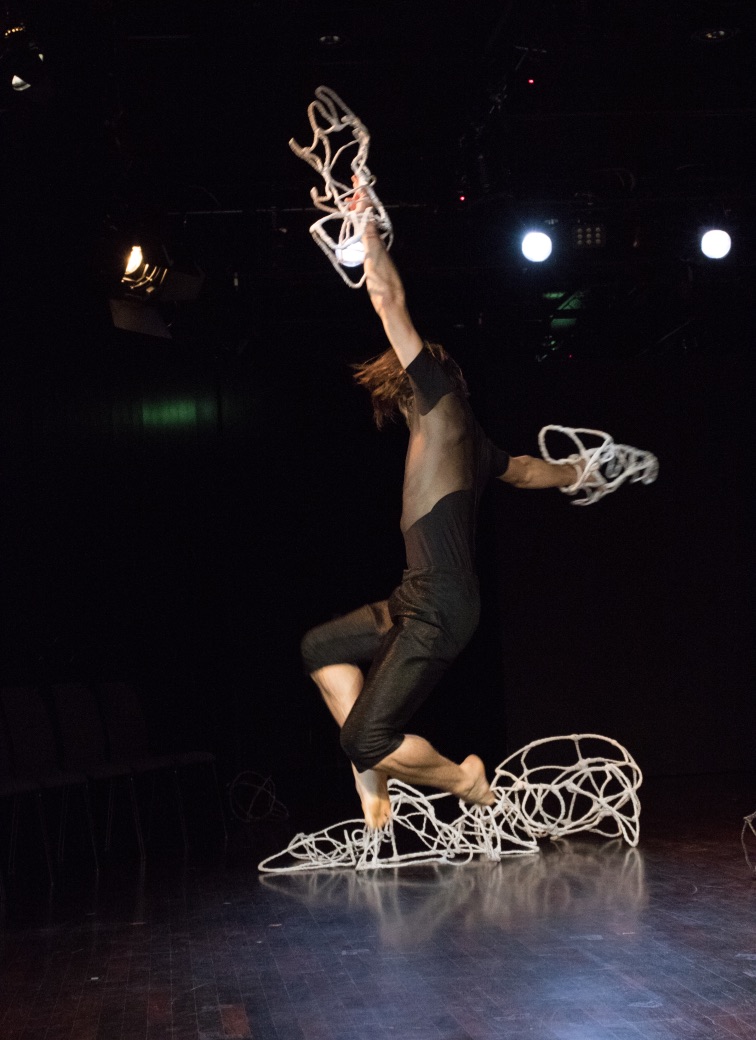
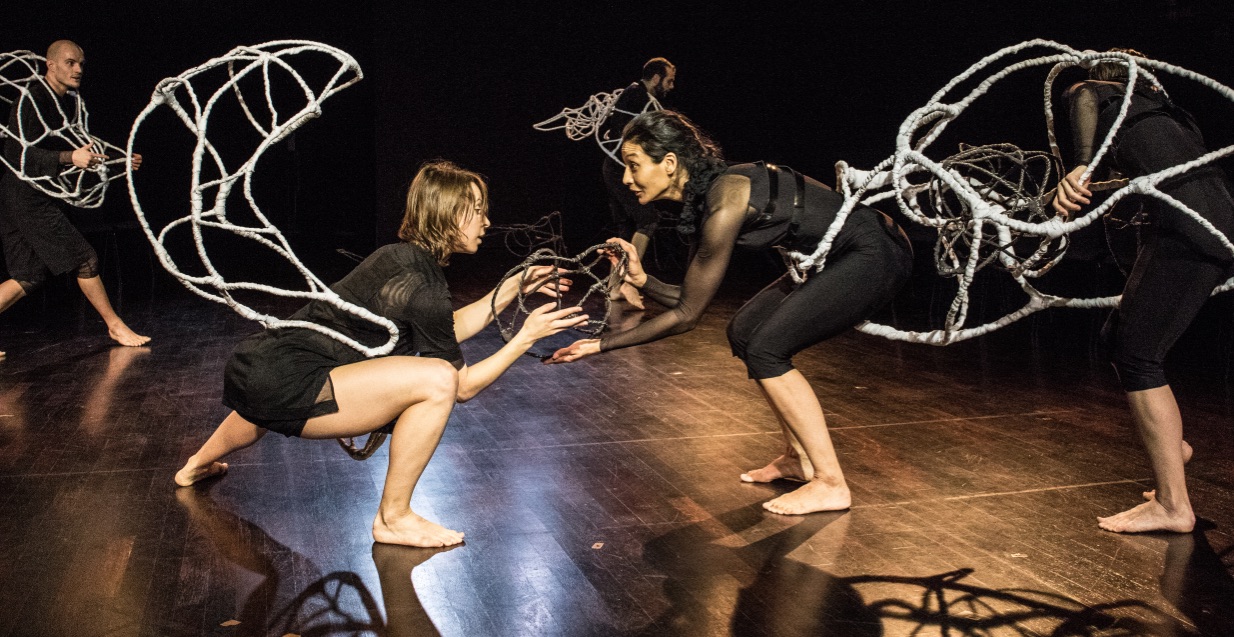
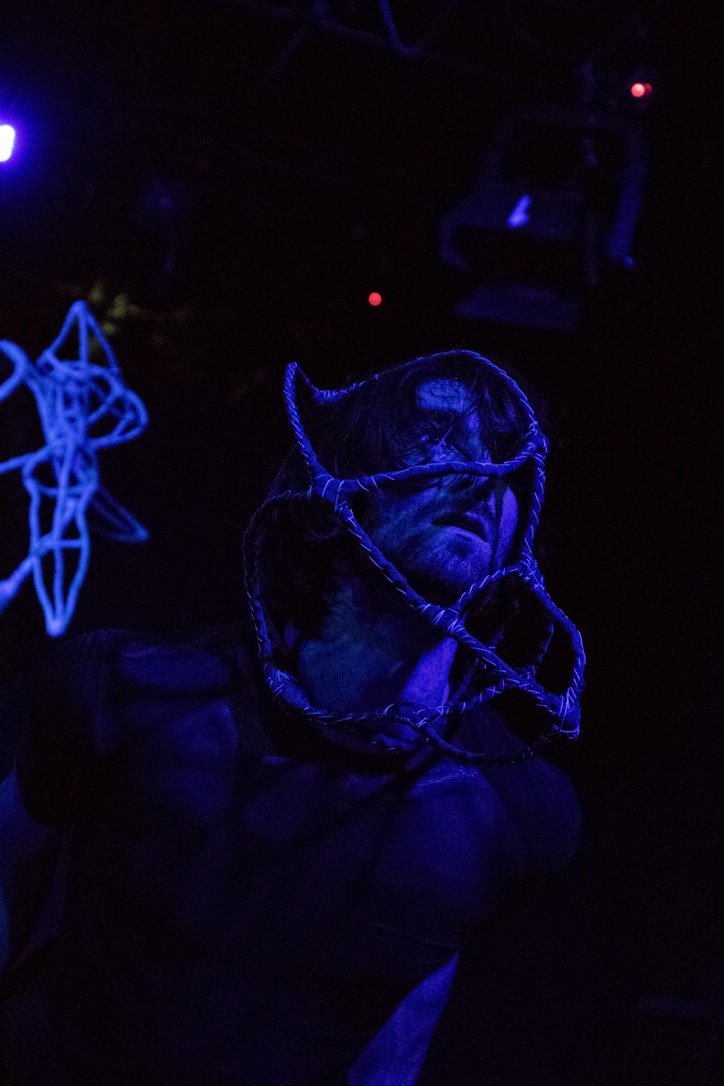
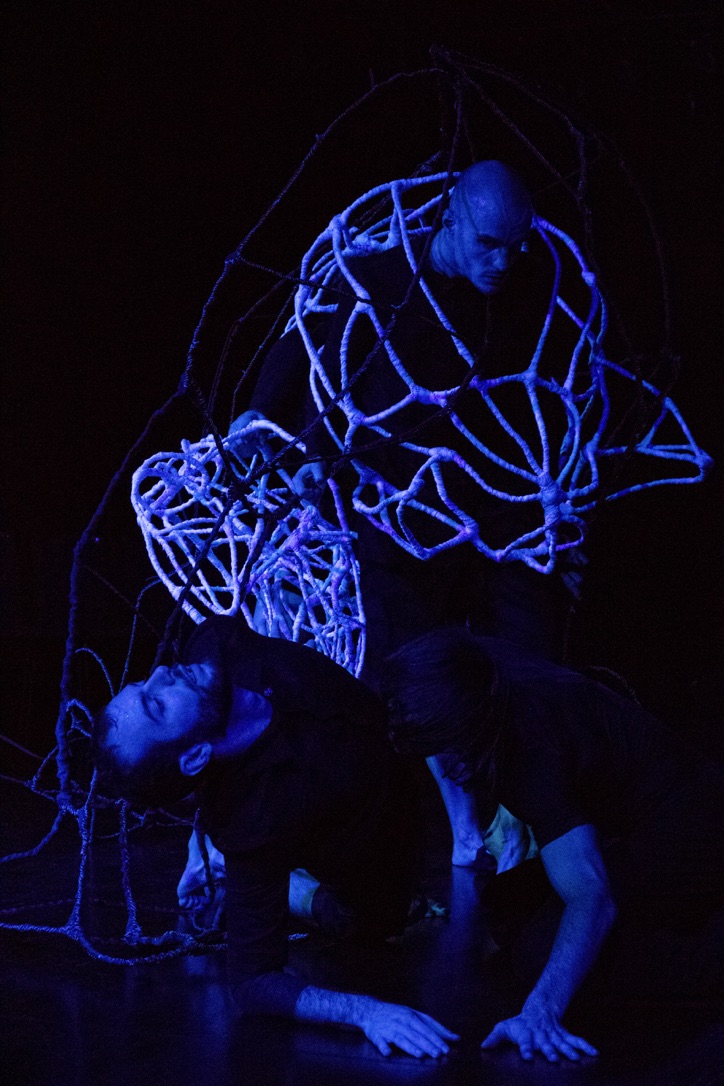
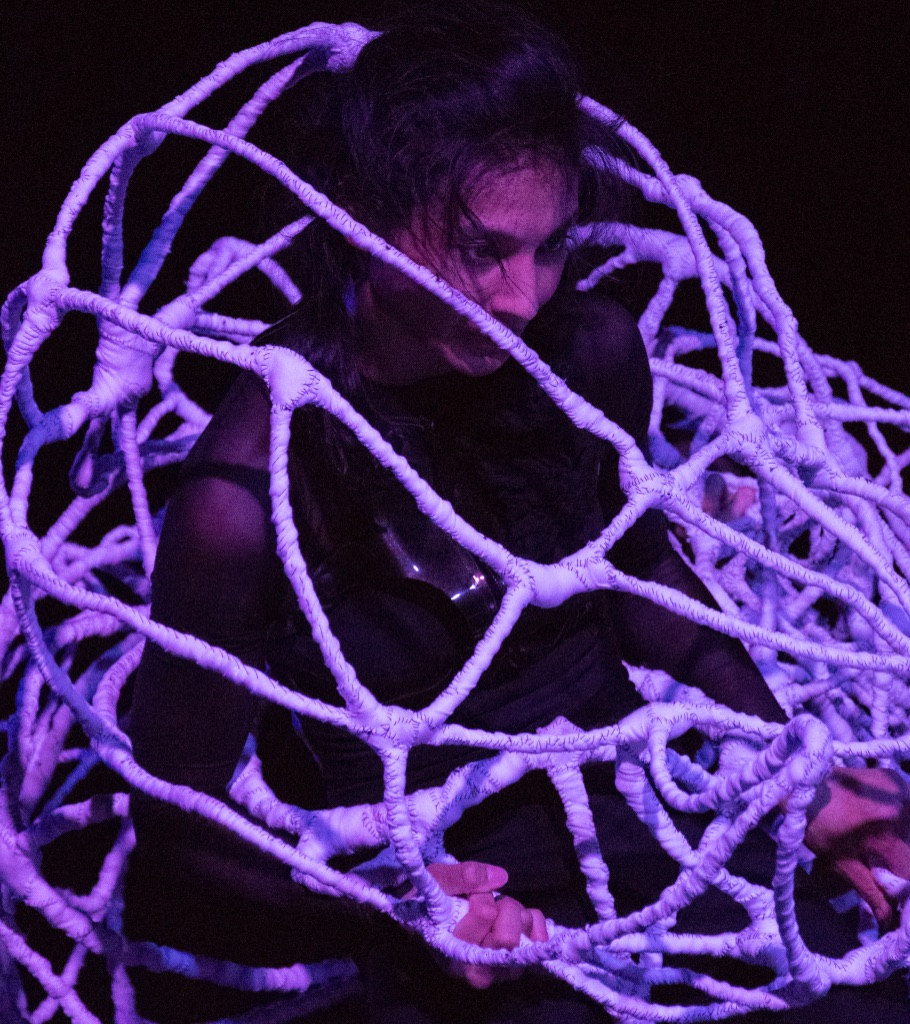
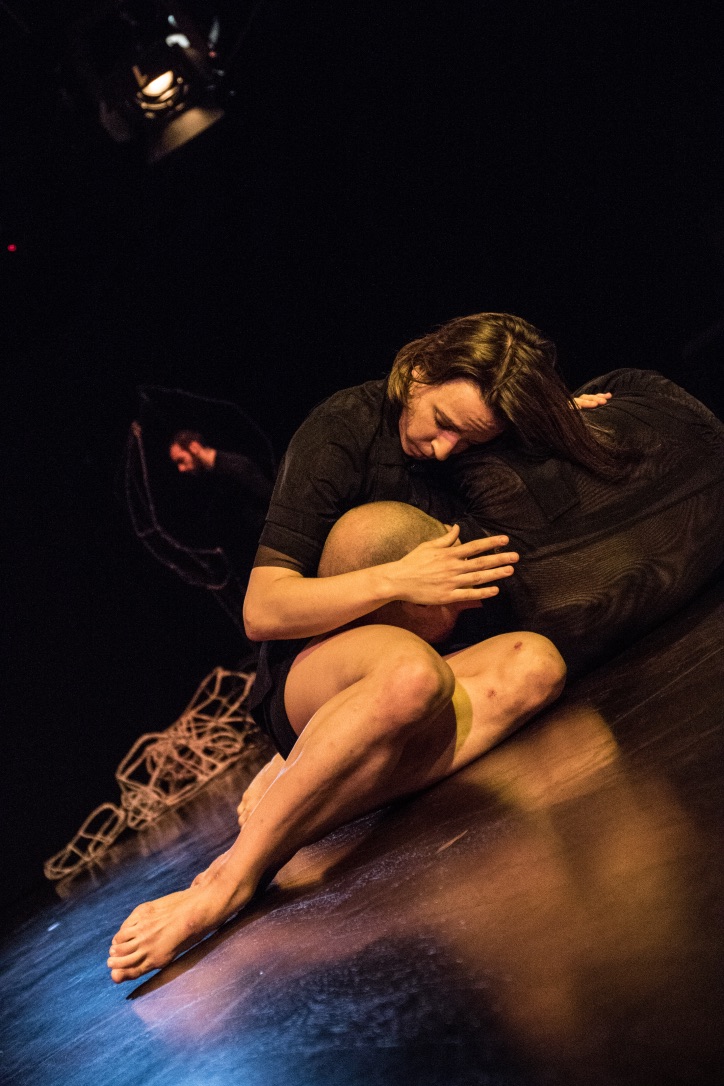
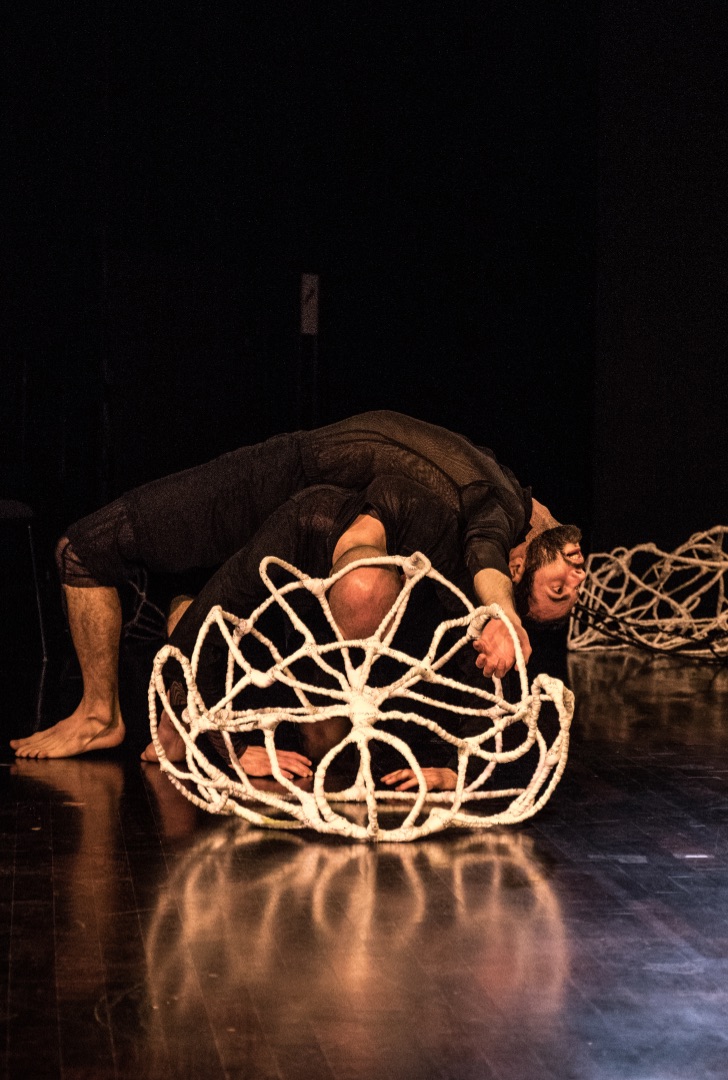
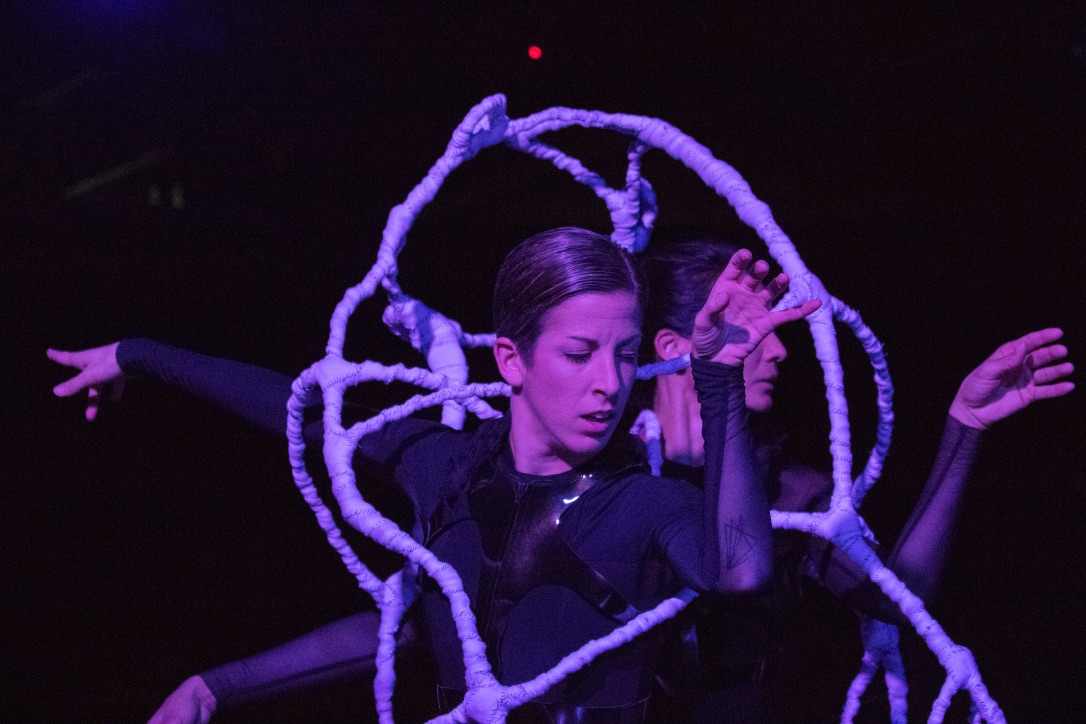
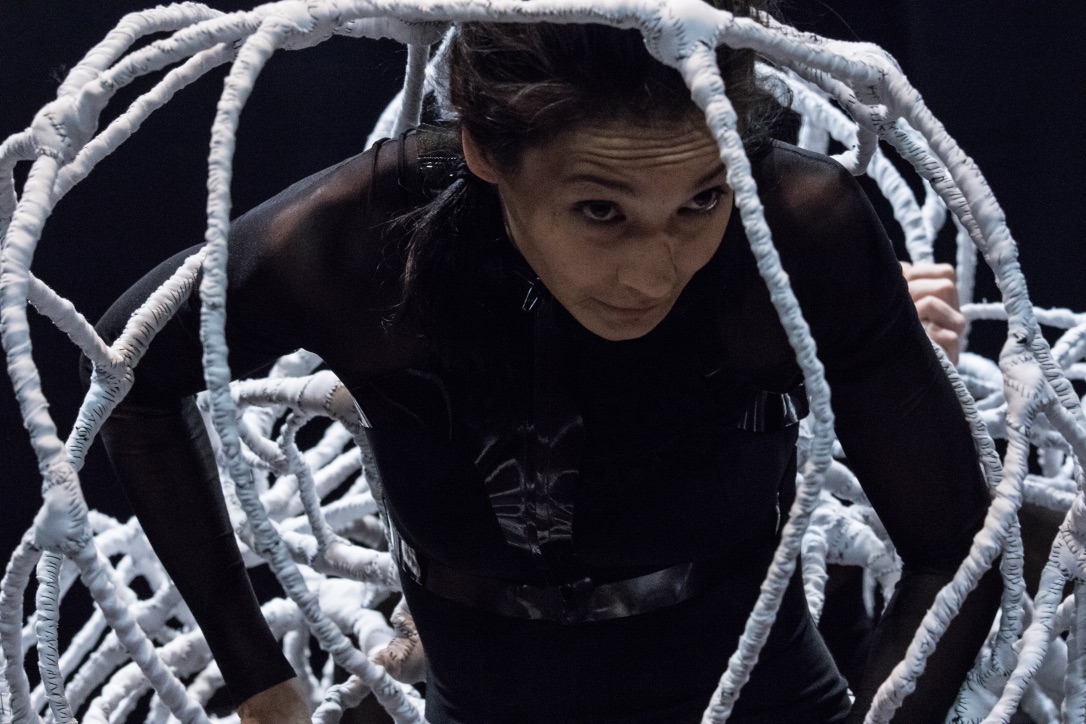
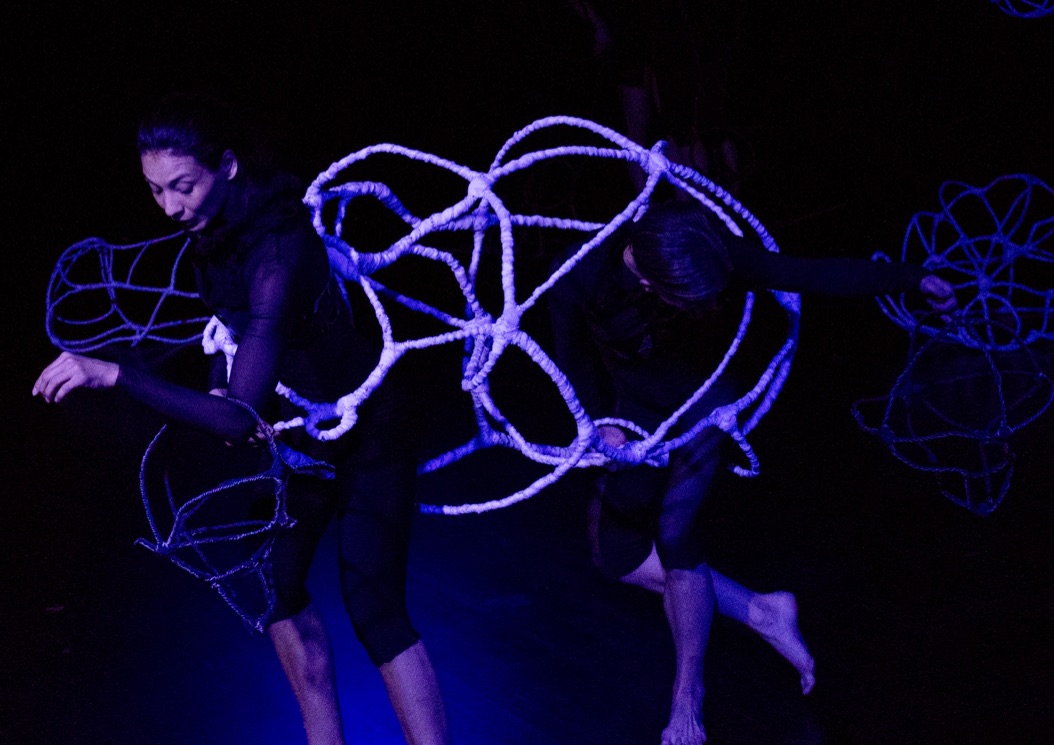
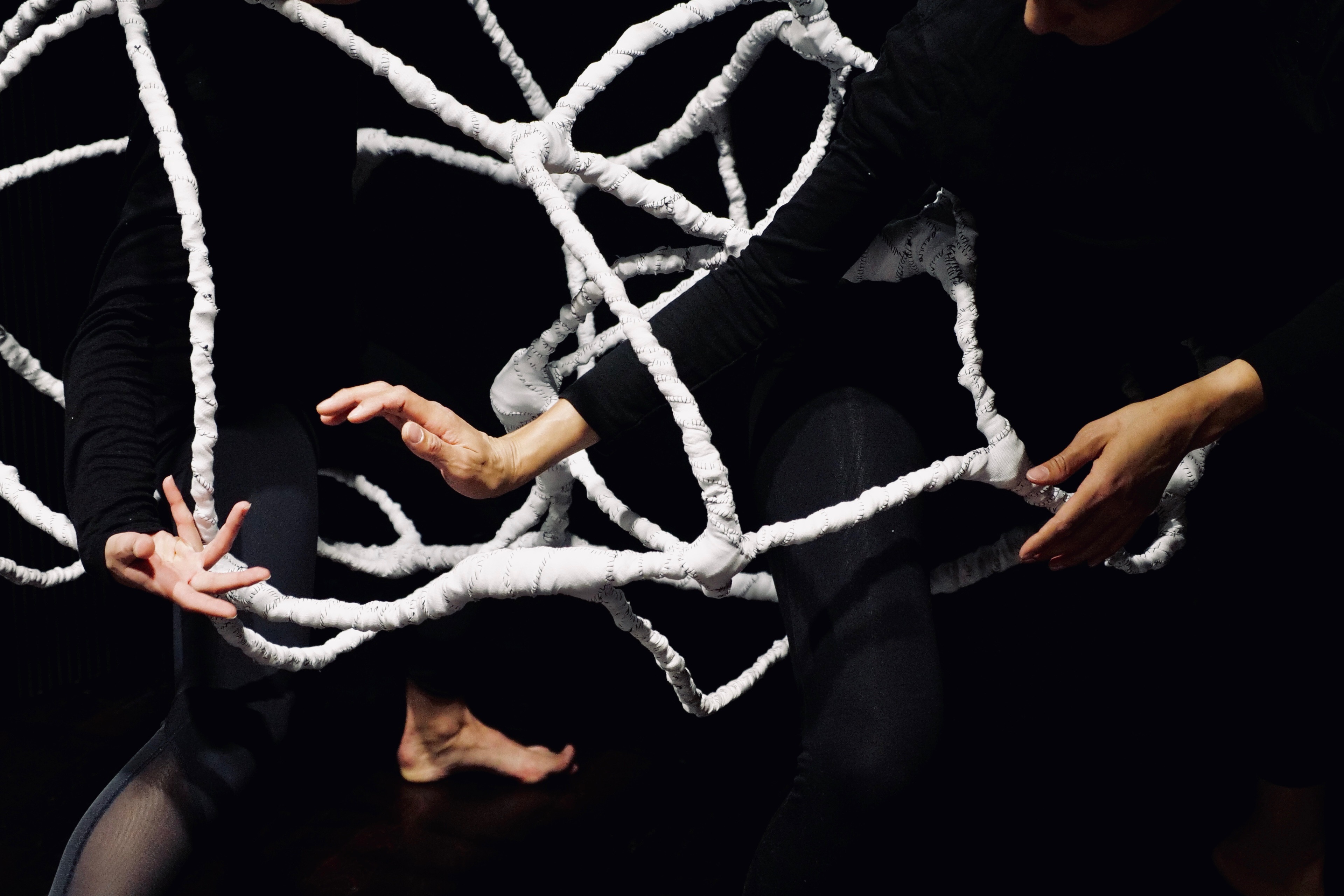
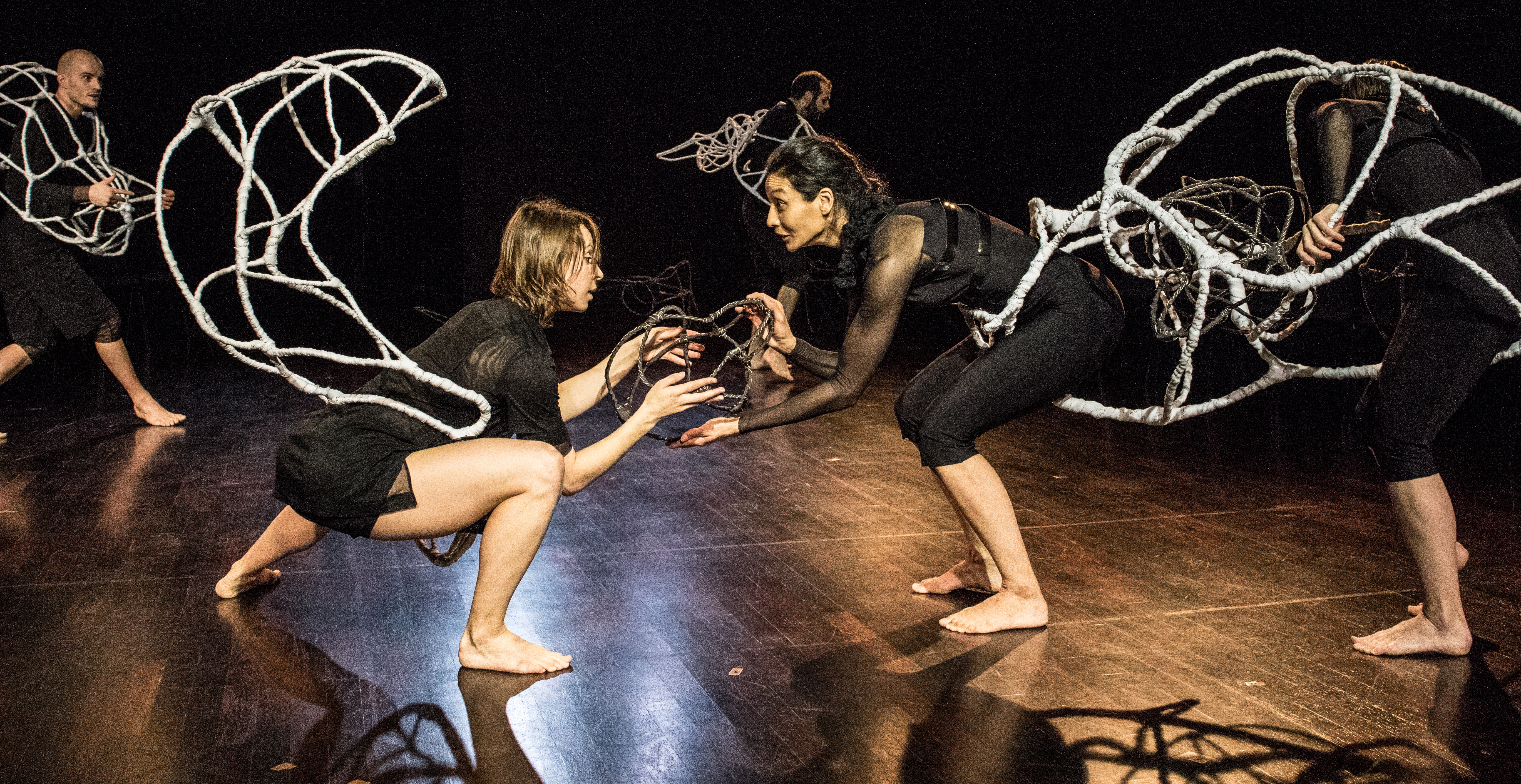
In this 2018 production, scenic artist Aleksander Kaplun designed striking geometric structures of wire and fabric that served simultaneously as costumes, props, and set pieces. These hybrid forms enabled the dancers to morph into the mythological creatures of the Anansi stories, blurring boundaries between human and animal, animate and inanimate.
Focusing specifically on Shi Maria, Miyazato made a bold choreographic choice: the female spider would be portrayed by two female dancers, whose intertwined bodies and movements echoed the entanglements of spider limbs and woven narratives. Their fusion with Kaplun’s sculptural objects gave rise to a distinctive movement language—visceral, otherworldly, and compellingly inhuman.
Though small in size, Shi Maria emerges as a powerful force. A feminine trickster in her own right, she carries a timeless wisdom and a quiet strength that challenges traditional notions of power and scale. In Miyazato’s interpretation, Shi Maria is not just a character from folklore; she becomes a symbolic figure of agency, desire, and transformation.
Team
Choreography: Andressa Miyazato, in collaboration with the dancers Nur Giménez Villarroya, Urko Fernández Marzana, Hodei Iriarte Kaperotxipi, Tura Gómez, and Lorenzo Ruta
Story and Stage Design: Aleksander Kaplun
Music: Moritz Morast
Video by Jonatan Salgado Romero
 Andressa Miyazato