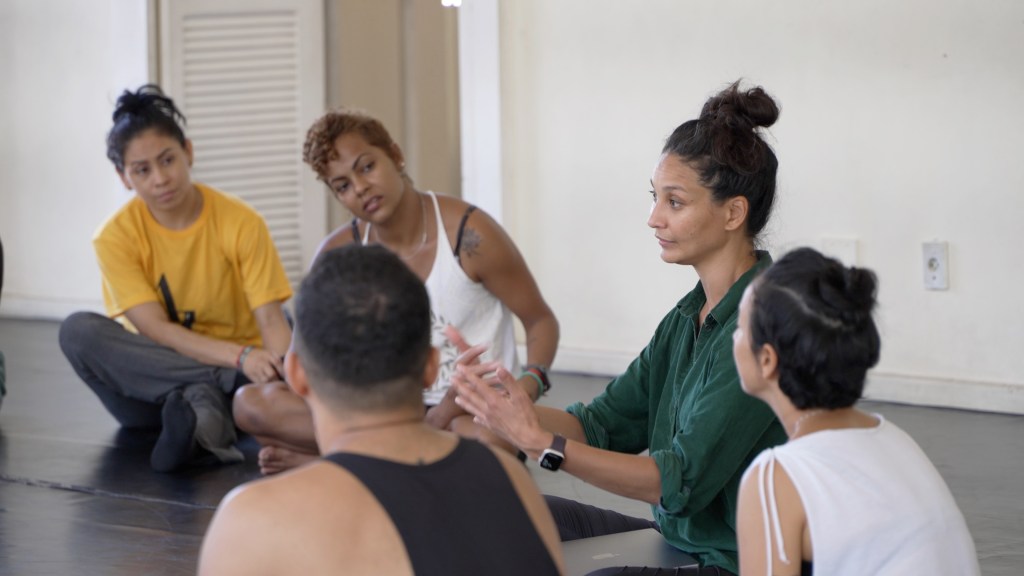
Rooted in bodily practices, my research unfolds as a personal journey toward decolonizing the ways of knowing and classifying that have shaped my understanding of dance. I approach research as a shared process, acknowledging my own position within systems of privilege and power, and taking responsibility for the privilege I have of studying within a university context. Through this awareness, I aim to contribute to creating space for more plural, situated, and embodied forms of knowledge through dance.
My trajectory began with an investigation of interculturalism in dance, which introduced me to postcolonial theories and their contribution to dance studies. Since then, I have deepened my inquiry into the political and poetic potentials of the body, improvisation as a critical tool, and repertoire as a living device of ancestral memory.
My doctoral research is conducted within the Department of Künstlerische Wissenspraktiken (Artistic Knowledge Practices) at the University of Arts and Design in Linz, Austria, a context that provides a fertile environment for experimenting with transdisciplinary approaches to knowledge, particularly those that place the body at the center of inquiry. I am supervised by Univ.-Prof.in Dr. phil. Amalia Barboza (Leiterin, Künstlerische Wissenspraktiken) and Univ.-Prof.in Mag. Rose Breuss (Department of Dance, Anton Bruckner Private University).
Entitled Hemispheres: An Epistemic Alternative through the Case of the Teatro Amazonas, my research takes the Teatro Amazonas in Manaus, Brazil, as a case study to explore how bodily practices can engage with the historical and material traces embedded in monuments. Using the theater as an example, the work investigates ways to re-signify these traces through sensitive, embodied approaches, rather than remaining “still” within inherited narratives.
The process begins with a reflective revision of my own bodily practices and extends into collaborative engagement with the dancers of the Corpo de Dança do Amazonas. The dance piece Urutau, the artistic component of my dissertation, is the culmination of this trajectory of (un)learning. I am deeply grateful to all who contributed to this journey, which allowed me to explore dance from alternative perspectives.
Research Overview
“De-/Kolonisierung des Wissens.”
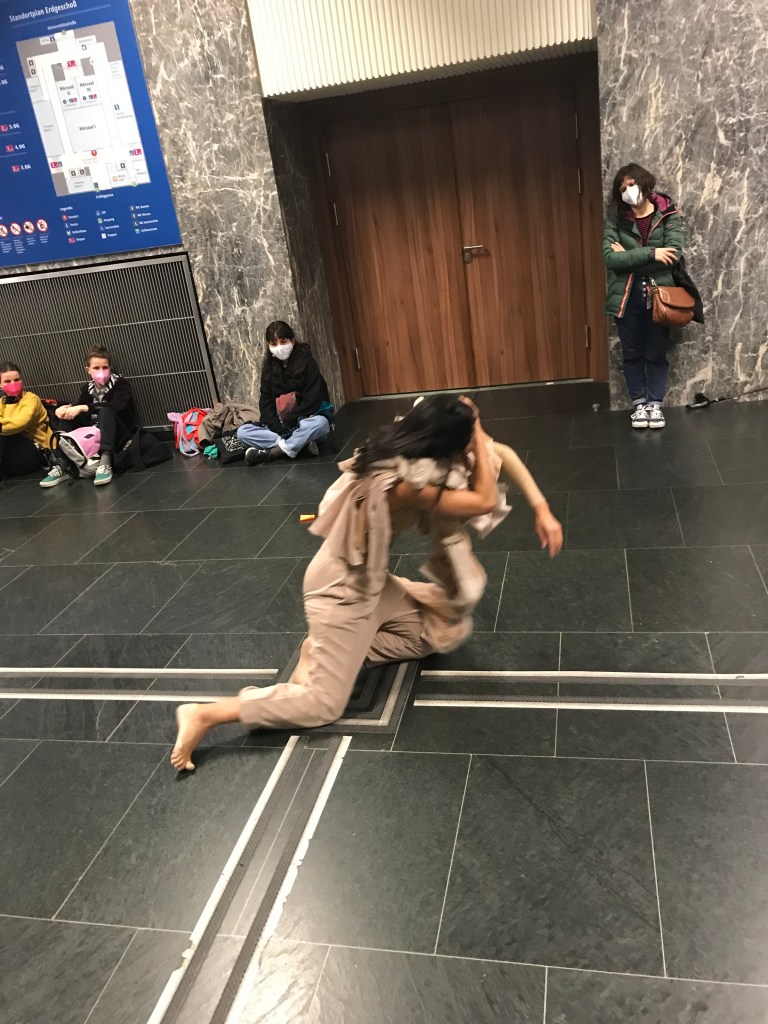
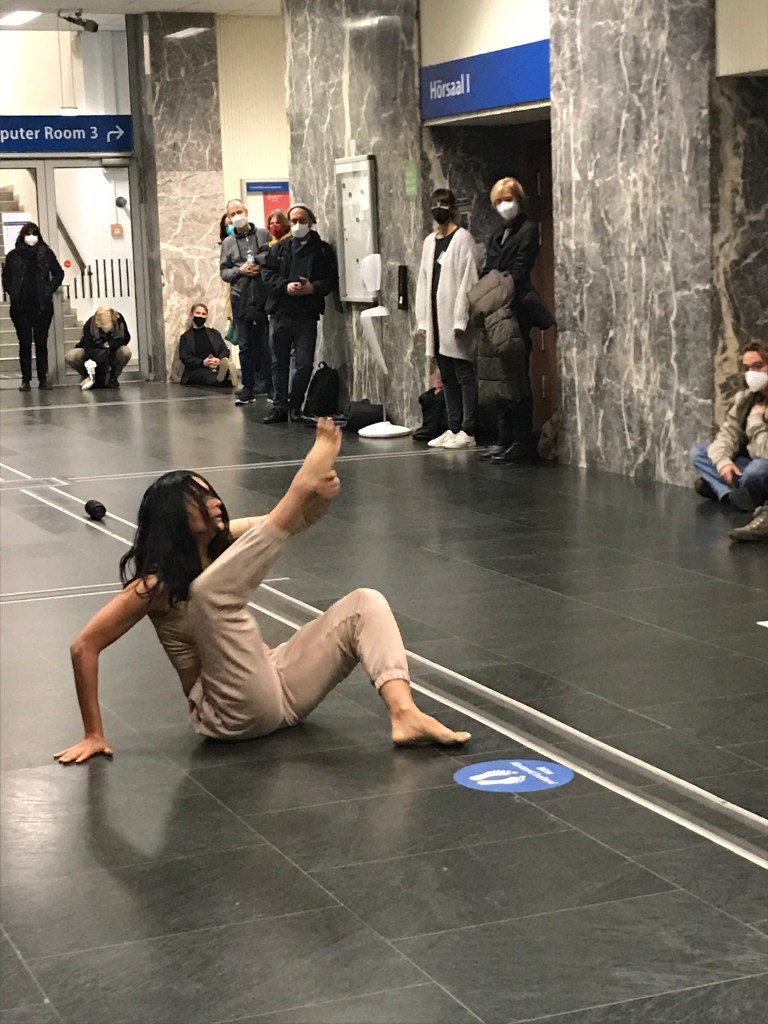
I participated in the De-/Kolonisierung des Wissens (De-/Colonizing Knowledge) conference, held from November 19–21, 2021, in Vienna — a collaboration between the University of Vienna, the Academy of Fine Arts Vienna, the University of Arts Linz, the IWK, and the IFK. The conference aimed to foster dialogue between decolonial initiatives within and beyond academic institutions, addressing epistemic mechanisms of (neo-)colonialism and exploring alternative modes of knowledge through scholarly, artistic, and activist contributions. I presented a dance performance entitled Verräterische Bewegung, which I later wrote about in a text published in the book Umwege / Detours, gathering artists and scholars examining how art-based practices can decolonize knowledge. https://books.ub.uni-heidelberg.de/arthistoricum/catalog/book/1588. My contribution, extended the performance onto the page — a space to reflect on how Autoethnographic accounts in dance research, can expose colonial patterns still embedded in contemporary dance practices.
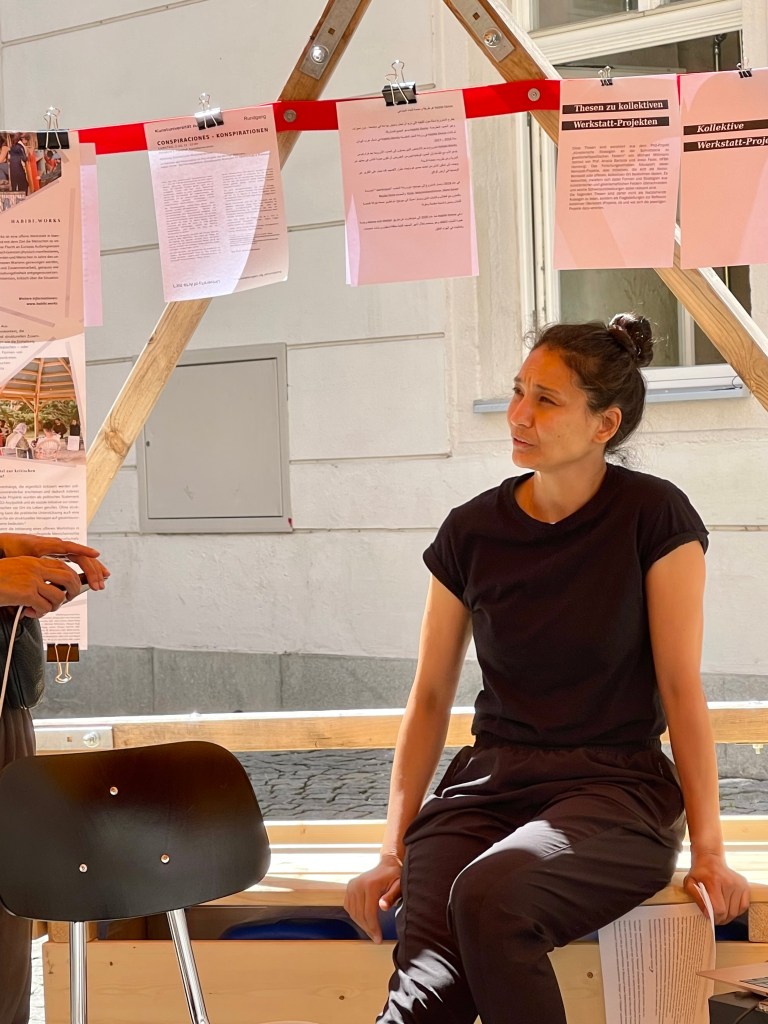
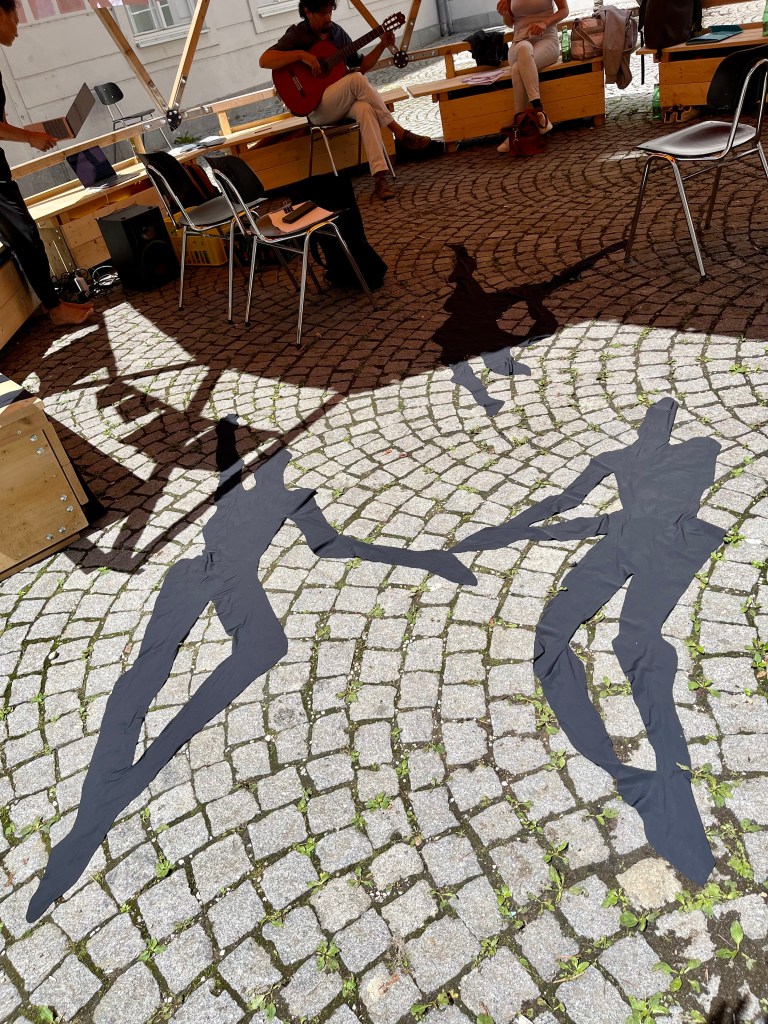
On July 2, 2023, I took part in Conspiraciones, a doctoral research gathering initiated by Prof. Amalia Barboza (Department of Artistic Knowledge Practices, University of Arts Linz). Instead of presenting our projects in a traditional format, we engaged in open exchanges that revealed the entanglement of our questions, materials, and artistic media.
At this stage of my research, I presented a short solo study with the song “Xapuri do Amazonas” by Nazaré Pereira—born in Xapuri, a city marked by the Amazonian rubber cycle and the environmental activism of Chico Mendes. Her voice carries the layered histories of extractivism, resistance, and displacement that I sought to encounter through movement.
Attuning my dancing body with her music became a way to approach Manaus and the Teatro Amazonas through dance itself: Which dance? Which body? I began exploring the potential of working beyond existing dance repertoires, engaging with what I term non-human dancing archives—entanglements of materials, objects, and more-than-human agencies connected to the Amazon rubber history.
When I speak of staging a dance piece, I refer not only to movement but to how choreography interacts with costume, light, and scenography. Working with the idea of Expanded Choreography, which shifts focus from the human performer to the relationships among all elements on stage, I started to ask whether choreography could intervene in environmental and historical conditions.

First Artistic Residency with the Amazonas Dance Company – 2023
This video was presented as part of the work-in-progress showing at Teatro Amazonas in 2023. It was edited to provide the audience with an overview of the creative process and its atmosphere prior to the performance. Filmed and edited by @JonatanSalgado.
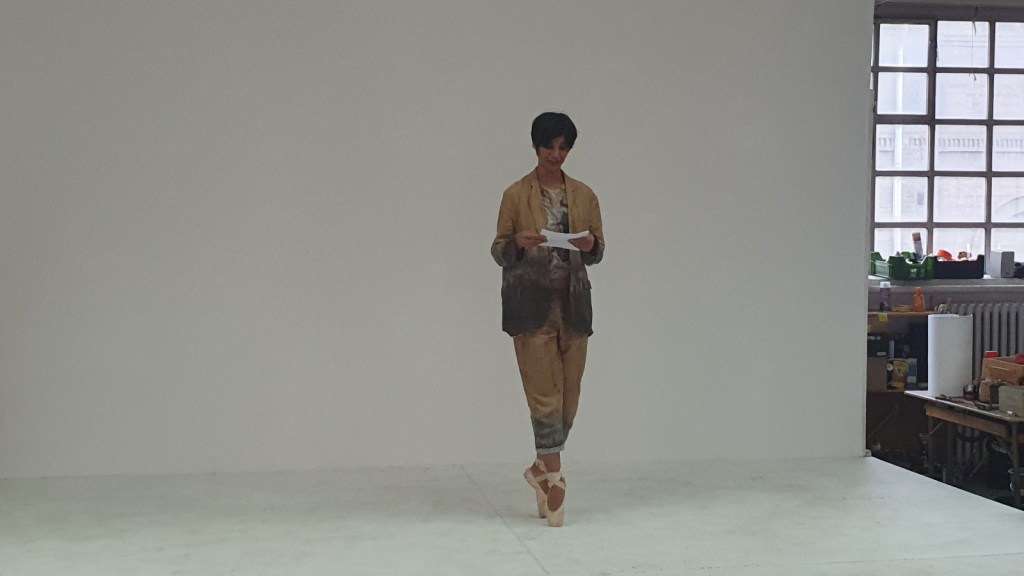
Hands/rubber/tree/seeds/blood/marble/sweat/mirror/skin/rust/columns/spine/steel/feathers/weapon/point shoes…


At the interdisciplinary panel Die Stummheit der Materialien: Über kulturwissenschaftliche und künstlerische Methoden, held on September 28, 2023, at the UNESCO World Heritage Site Völklinger Hütte. The panel, curated by Prof. Dr. Amalia Barboza (Kunstuniversität Linz) and Prof. Georg Winter (HBK Saar), brought together artists and cultural scholars to explore new methods for engaging with the silence of materials and the language of the body through lecture-performances.
I presented a lecture-performance that explored the silence of the building materials of the Amazonas Theatre, through dance. Rather than extracting characteristics from these materials to translate them into dance movement, my performance followed parallel trajectories between colonial history and the potential for re-signification through dance—composing a body that contains those who have been silenced and rendered invisible. It speculated on what was muted in (my) body as a postcolonial dancer.
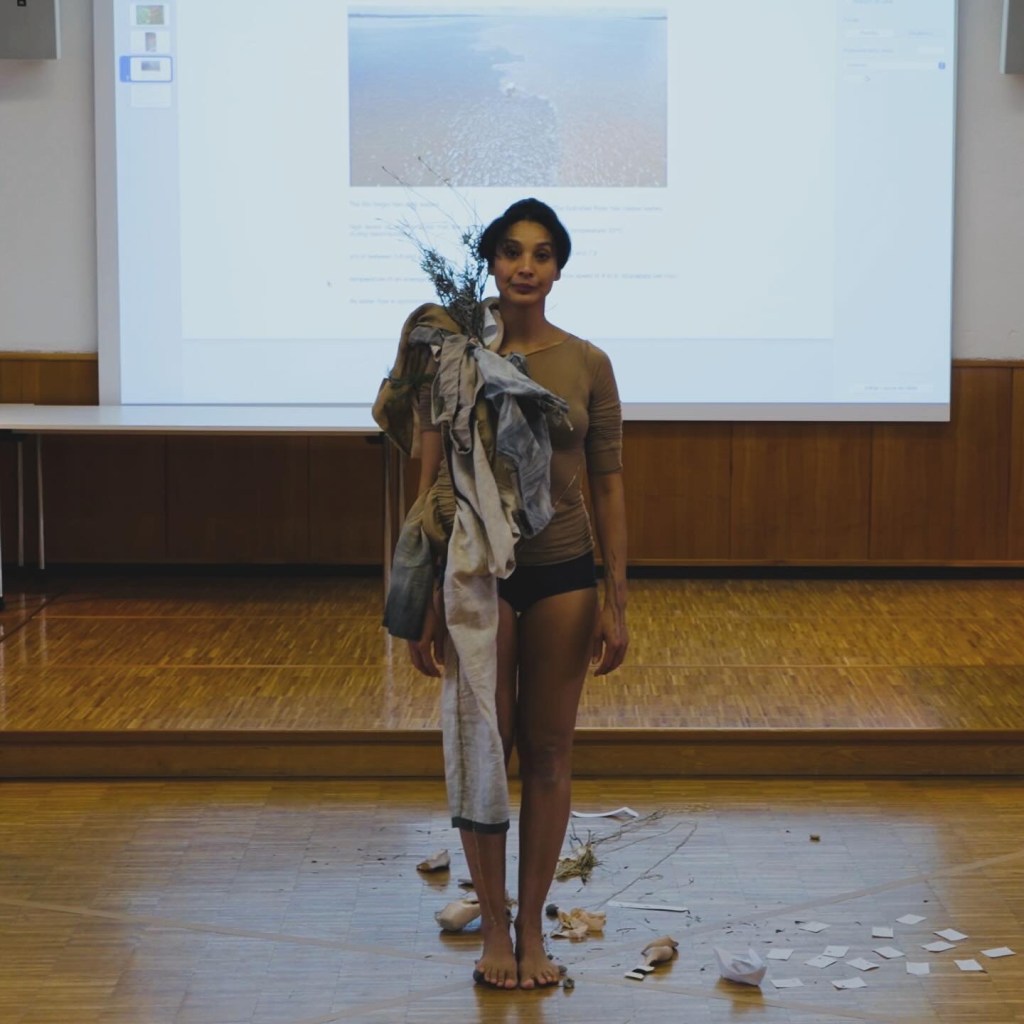
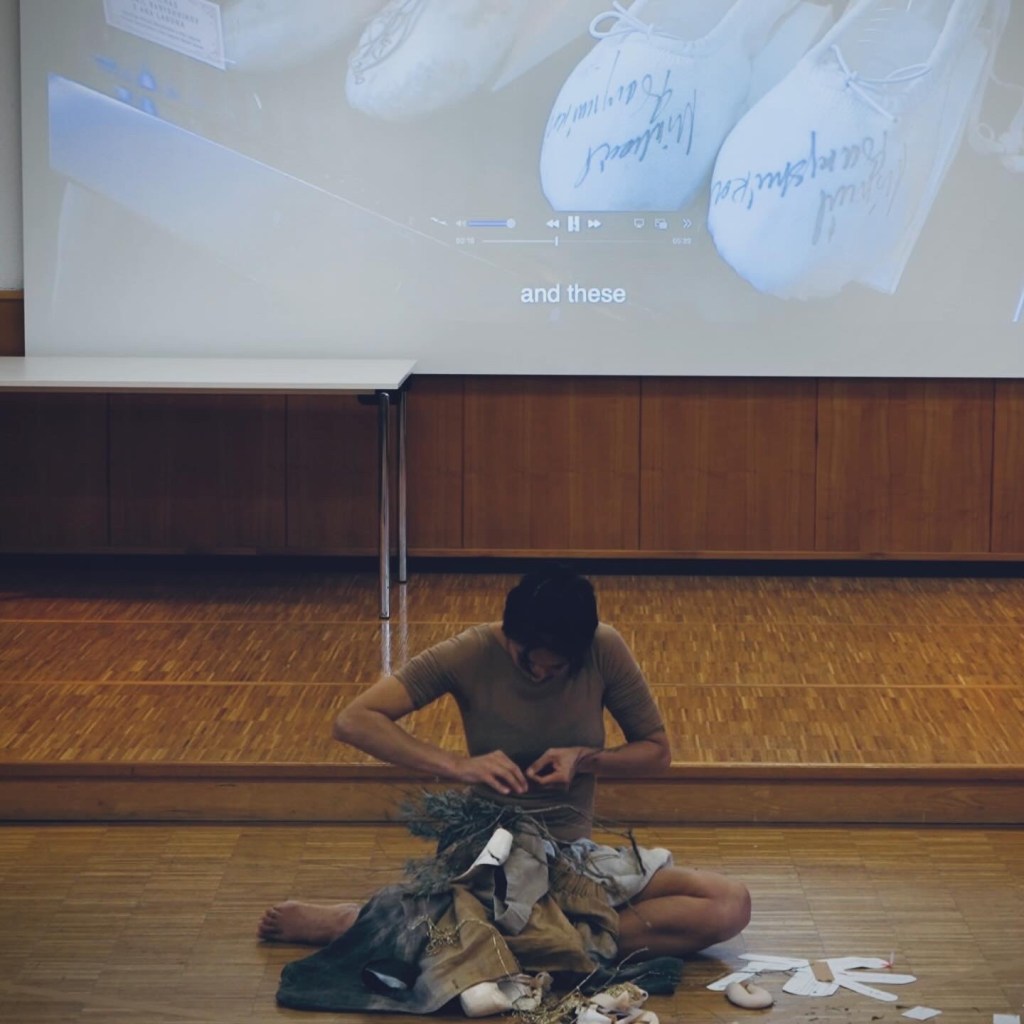
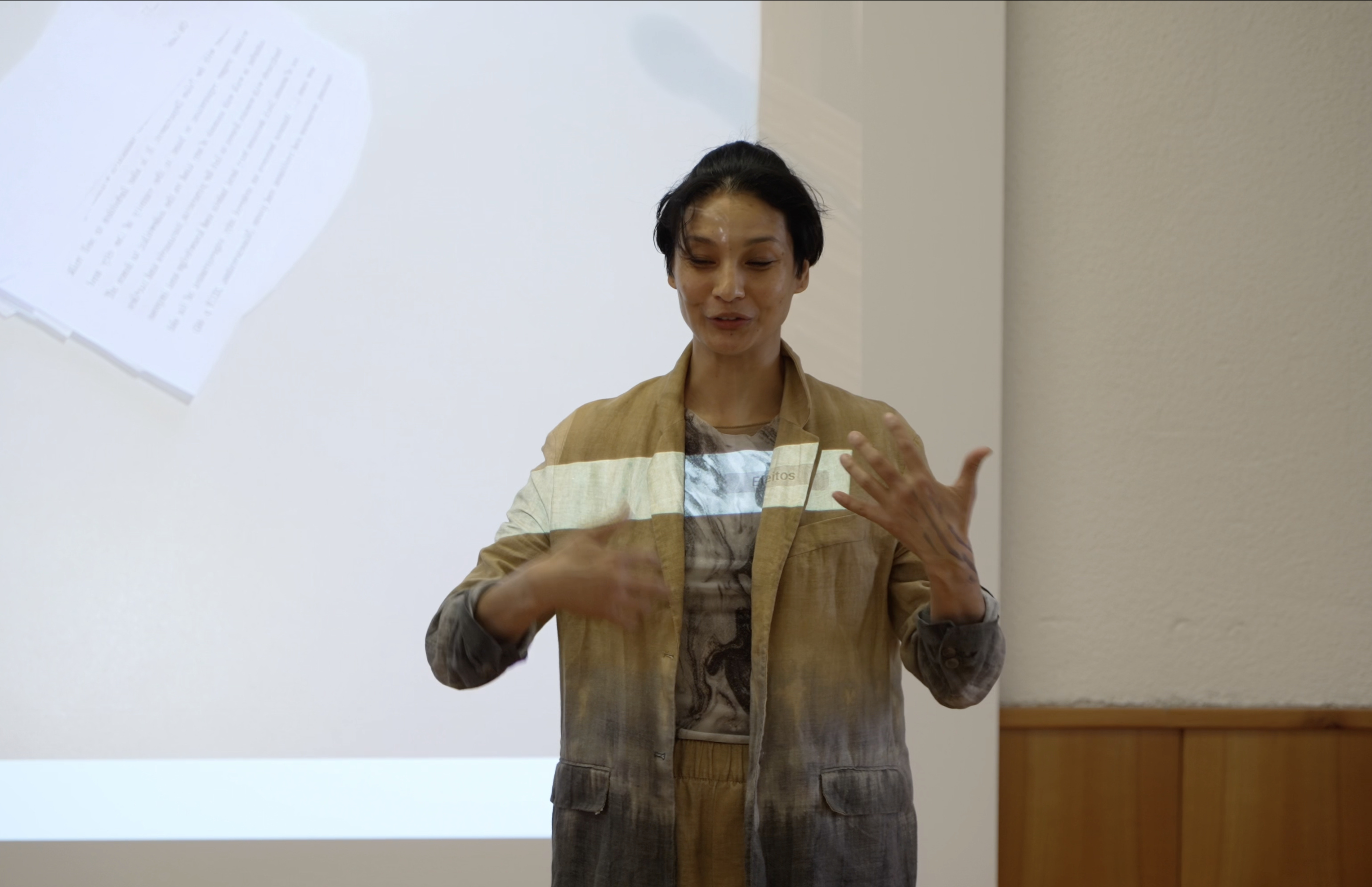
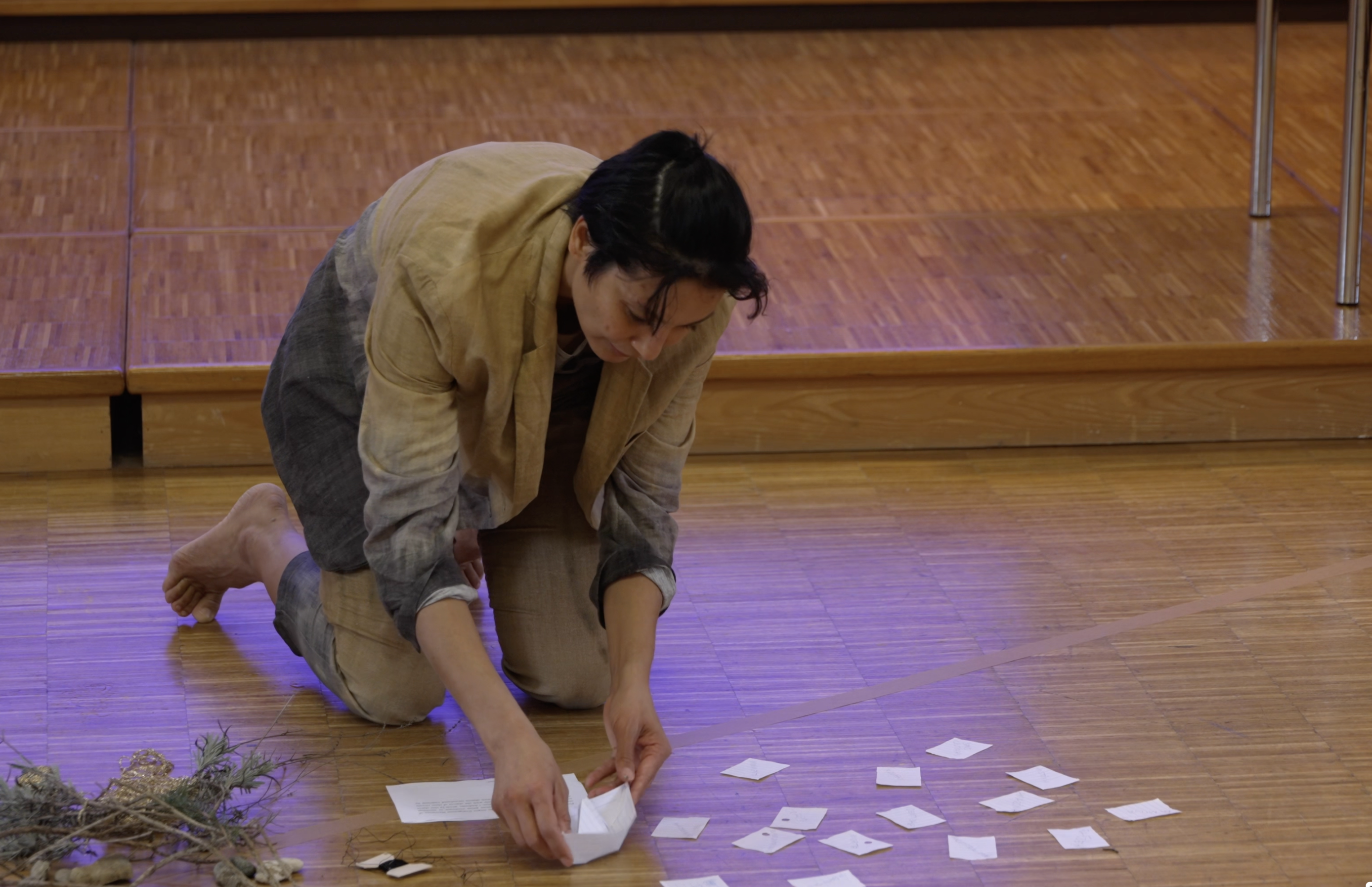

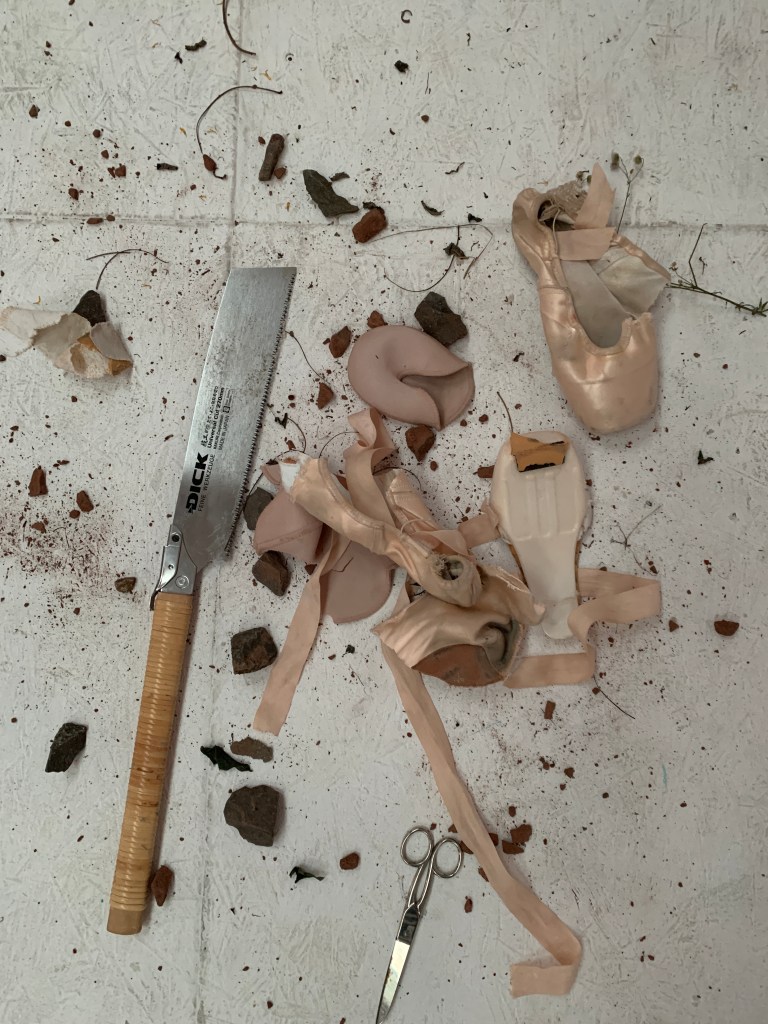
At the second edition of the SHARE–ROSENBERG FESTIVAL (December 7–9, 2023) in Linz, Austria—an international event on dance research hosted by the Institute of Dance Arts (IDA) at Anton Bruckner Private University and curated by Rose Breuss—I presented the lecture-performance Hands/rubber/tree/seeds/blood/marble/sweat/mirror/skin/rust/columns/spine/steel/feathers/weapon/point shoes… This work continued the research previously shared in the panel Die Stummheit der Materialien (2023). Drawing from my first meeting with the Corpo de Dança do Amazonas, the lecture-performance became a site for embodied inquiry, engaging with the knowledge and experiences gathered in the Amazonas not as data, but as living, performative, and visceral material. What does it mean to be moved by the supposed data?
In the third edition of the Rosenberg Dance Research Festival (October 30 – November 2, 2024 at Anton Bruckner Private University (ABU), I offered a workshop presenting one of the methods developed during my collaboration with the dancers of the Corpo de Dança do Amazonas. Using the decorative mural panels of the Amazon Theatre as a starting point, the session invited participants to reflect on how visual and material archives can activate choreographic processes.
The workshop served as a space to share my concerns and foster reflection on ethical awareness in choreographic creation—particularly how to avoid reinforcing stereotypes or colonial narratives when working with culturally and historically charged materials. It also opened a dialogue on the use of ethnographic approaches within arts-based research, considering how decolonizing methodologies demand attentiveness to context, representation, and positionality in both research and creation processes.
Creative Process with Corpo de Dança do Amazonas
This video documents an early phase of the choreographic process with dancers from the Amazonas Dance Company at the Teatro da Instalação in Manaus, Brazil, capturing the encounter between bodies and sound prior to the integration of set or theatrical elements.
The entire creative process was guided by the dancers’ own rhythms, breathing, and internal sensations. Composer Fábio Cardia later created the score based on rehearsal videos. The video shows one of the final rehearsals, in which dancers, myself, and assistant Paulo Chamone engaged with the music, shifting focus from internal rhythms to the soundscape in a reciprocal process that expanded our shared understanding of temporal experience. The dancers were responsive and generous, incorporating instructions in real time, allowing attention to individual rhythm, relational timing, and the emergent dramaturgy of the intermediate moments.
Urutau — Institutional trailer
This trailer presents the final phase of Urutau, the artistic component of my doctoral research, developed in collaboration with the dancers of the Corpo de Dança do Amazonas and funded by the Government of the State of Amazonas.
The title of the piece, Urutau, emerged as a reflection of correspondences between the qualities of the bird—its camouflage and subtle presence—and the movement patterns that appeared in the dancers’ bodies through practice of contact (and) improvisation. In the Tupi Indigenous language, Urutau means ‘ghost bird,’ and its melancholic symbolism resonated with the postcolonial contexts explored in the work.
The work was influenced by a diverse cultural and artistic base, including the book Ilusão do Fausto by Edinéa Mascarenhas Dias, Goethe’s Faust, and the paintings of Hahnemann Bacelar, as well as my experiences in Manaus and in riverside communities such as Nossa Senhora do Livramento.
The theoretical and methodological reflections emerging from this work continue to be developed in my dissertation, written in parallel with and following the premiere of the piece. A documentary film is also in progress, aiming to communicate the context from the perspective of the creative process.
Dancers, Movement Collaboration, Adailton Santos, Adriana Goes, Cléia Santos, Frank Willian, Felipe Cassiano, Gabriela Lima, Helen Rojas, Huana Viana, Ian Queiroz, Julio Galúcio, Larissa Cavalcante, Liene Neves, Luan Cristian, Marcos Felipe, Pammela Fernandes, Rodrigo Vieira, Rosi Rosa, Sumaia Farias, Talita Torres, Thaís Camillo, Valdo Malaq, Victor Venâncio, Wellington Alves
Conception and Choreography
Andressa Miyazato
Composer
Fabio Cardia
Visuals
Jonatan Salgado Romero
Lighting and Scenic Design
Marcelo Zamora
Lighting Production, Setup, and Operation
Wallace Heldon
Production Assistant
Eduardo Klinsmann
Costume Design
Ian Queiroz
Costume and Set Workshop
Mara Ribeiro
Corpo de Dança do Amazonas
Artistic Director
Mário Nascimento
Artistic Producer
Wallace Heldon
Ballet Rehearsal Instructor
Paulo Chamone
Choreography Assistant
Helen Rojas
Physical Conditioning Instructor
Liene Neves
Inspector
Eduardo Klinsmann
Physiotherapist
Danilo Mattos
Physiotherapy Intern
Lívia Barbosa
Pianist
Celly Monteiro Mendes
Filming Date: September 10, 2024
Video edited by Jonatan Salgado Romero
Location: Teatro Amazonas
Funded by the Government of the State of Amazonas
 Andressa Miyazato